Rice is a staple in any kitchen, and with so many different types, it lends itself to a limitless number of recipes. Before you add the same type of rice to every recipe you prepare, however, think twice. Substituting one type of rice for another can really alter the result of a recipe. Each type of rice has its own taste, texture, and unique properties that work well with different cooking applications. So how do you know which one is the best type of rice to use? This guide examines factors that differentiate types of rice, from nutty basmati to fragrant jasmine and more!
Parts of a Rice Grain
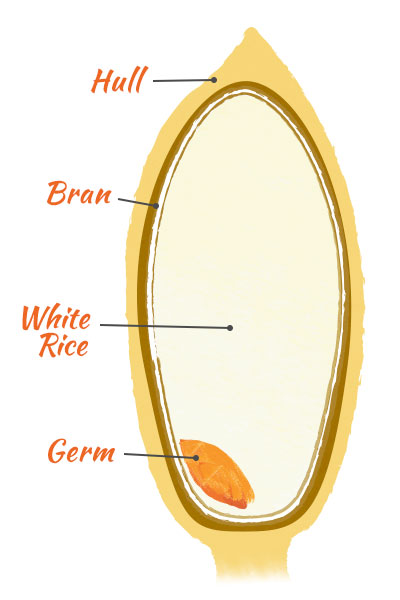
The following anatomy terms may be used throughout this guide when discussing the differences in types of rice
Hull
– Each grain of rice is enclosed in a tough outer hull, or husk, that needs to be removed before it can be consumed. This layer is removed in all rice types.
Bran
– Under the hull, the bran layer is not removed in all rice types. This nutritious whole grain section is usually tan-colored, but it may be reddish or black depending on the pigmentation in the bran layers. The bran layer may be consumed, but it is often removed when further processing rice.
White Rice
– Once the bran and germ layers are removed, white rice remains. Known as the endosperm, this is the part of the rice that is most commonly consumed.
White Rice
– Found under the hull, the germ, or rice kernel, is nutrient-dense. Full of B vitamins, minerals, and proteins, it helps give rice its color and added nutritional benefits.